


Seafaring remains one of the most lucrative careers in the world- and for good reason.
While land-based workers often dream of six-figure incomes, many seafarers earn that in a matter of months, depending on vessel type, rank, and company.
Whether you’re a cadet or a seasoned Master Mariner, understanding your salary benchmark is essential.
This guide breaks down the average monthly salaries of seafarers on international ships, focusing on tanker vessels and dry cargo ships, including recent wage adjustments up to 2025.
Let’s uncover the numbers behind the paycheck.
🛢️ Average Salary of Seafarers on Tanker Ships
Tanker vessels are among the highest-paying ships in the maritime industry and also among the riskiest.
Due to the hazardous nature of their cargo (like crude oil, chemicals, and liquefied gas), crew members receive premium compensation.
The exact monthly salary can vary depending on:
- Vessel type (e.g., oil tanker, chemical tanker, LNG carrier)
- Rank and experience
- Nationality
- CBA agreement
- Company policies (open vs. fixed overtime, incentives)
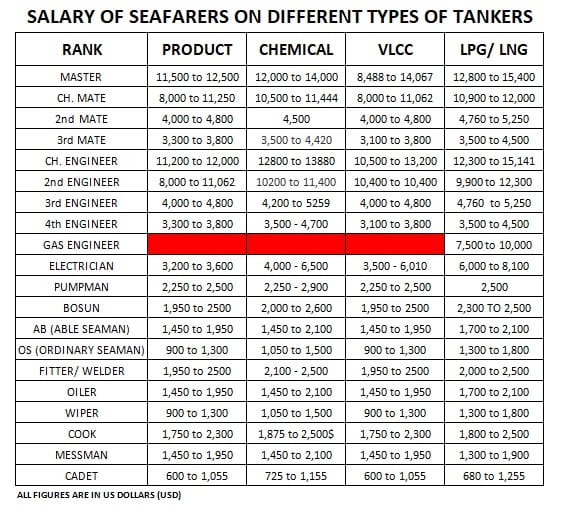
Here’s a general breakdown of the estimated monthly salaries on tanker vessels (in USD):
| Rank | Estimated Monthly Salary |
|---|---|
| Master | $11,500 – $15,400 |
| Chief Engineer | $10,500 – $15,000 |
| Chief Mate | $8,000 – $12,000 |
| Second Engineer | $8,000 – $12,000 |
| Third Mate | $3,100 – $4,500 |
| Able Seaman (AB) | $1,450 – $2,100 |
| Ordinary Seaman (OS) | $900 – $1,800 |
| Cadet | $600 – $1,200 |
📌 Note: Figures are based on current job postings, CBAs, and industry data from 2023–2024. Actual wages may vary depending on bonus schemes, seniority, and company practices.
💬 Firsthand Experience
In some tanker companies, cadets receive additional incentives from crew ratings or officers.
On open overtime systems, senior crew may allocate extra OT hours or shore leave “treats”- a form of shipboard camaraderie that can boost a cadet’s allowance by up to $100/month.
⚓ Salary of Seafarers on Dry Cargo Ships
While tankers often offer higher pay due to operational risk, dry cargo ships remain a major source of employment for international seafarers including bulk carriers, container ships, car carriers, and general cargo vessels.
Many companies offer competitive wages, especially for senior officers on bulkers and high-volume container liners.
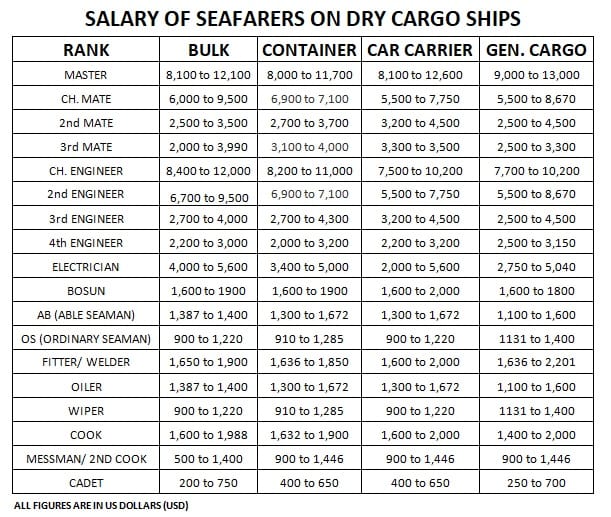
The income difference between dry cargo ships and tankers usually ranges between $300 to $1,000 per month for officers.
Here’s an overview of monthly salaries on dry cargo vessels:
| Rank | Estimated Monthly Salary |
|---|---|
| Master | $8,000 – $13,000 |
| Chief Engineer | $7,500 – $12,000 |
| Chief Mate | $5,500 – $9,500 |
| Second Engineer | $5,500 – $9,500 |
| Third Mate | $2,000 – $4,000 |
| Able Seaman (AB) | $1,300 – $1,600 |
| Ordinary Seaman (OS) | $900 – $1,400 |
| Cadet | $200 – $750 |
⚠️ Salary ranges vary by flag state, CBA coverage, vessel size, and voyage type (coastal vs. ocean-going).
If you’re deciding which vessel type to work on, pay scale is a key factor.
However, some dry cargo operators now match tanker pay especially in high-demand routes or with LNG feeder vessels.
📈 Minimum Wage Increase for Seafarers (2019–2025)
Beyond vessel types and ranks, there’s a globally recognized minimum wage that protects seafarers’ rights- set by the ILO Joint Maritime Commission (JMC).
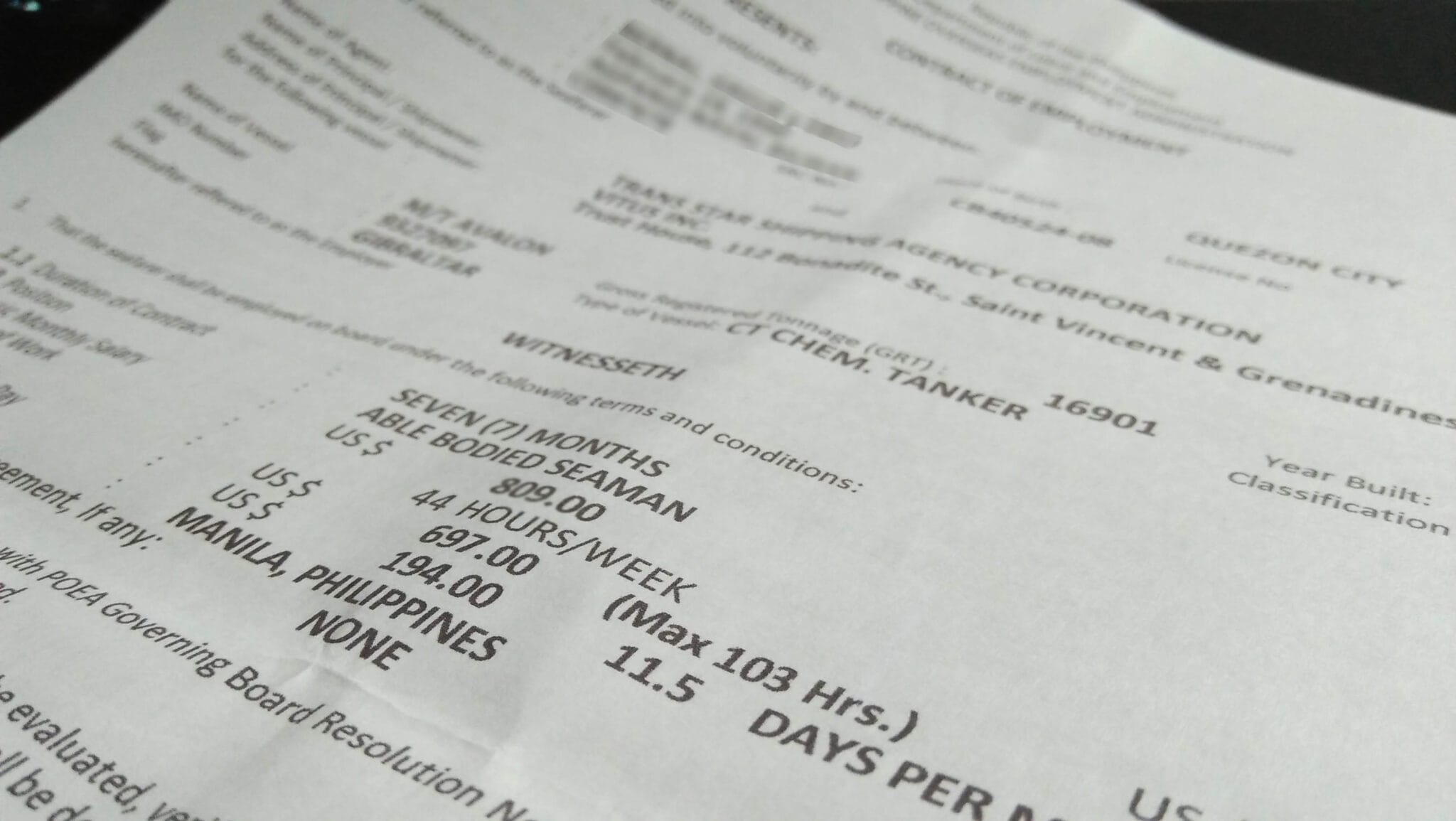
One of the most critical benchmarks is the Able Seaman’s (AB) minimum basic wage, which has been updated incrementally over the years:
| Effective Date | AB Minimum Basic Wage (USD) | Increase |
|---|---|---|
| July 1, 2019 | $618 | +$4 |
| January 1, 2020 | $625 | +$7 |
| January 1, 2021 | $641 | +$16 |
| January 1, 2022 | $648 | +$7 |
| January 1, 2023 | $658 | +$10 |
| January 1, 2024 | $666 | +$8 |
| January 1, 2025 | $673 | +$7 |
🧾 These increases reflect a 4.5% rise from the 2018 base of $614, accounting for global inflation and cost-of-living changes.
It’s important to note that this refers only to basic pay. Overtime, leave pay, bonuses, and other allowances are not included in this figure.
✅ At the start of 2025, the globally recognized minimum wage for an AB will be $673/month in basic pay alone.
⚖️ Who Determines Seafarers’ Wages?
Despite having the same rank or vessel type, two seafarers can earn vastly different salaries.
This is influenced not just by company policy, but by international labor standards, union agreements, and economic factors.
Let’s break down who and what governs maritime wages globally.
1. 🌍 ILO Joint Maritime Commission (JMC)
The International Labour Organization’s Joint Maritime Commission plays a central role in setting the minimum basic wage for seafarers, particularly for the Able Seaman (AB) position.
🏛️ How It Works:
- The JMC is a tripartite body consisting of:
- International Chamber of Shipping (ICS)
- International Transport Workers’ Federation (ITF)
- Government representatives from major maritime countries
These parties meet every 2–4 years to review wage standards using key economic indicators:
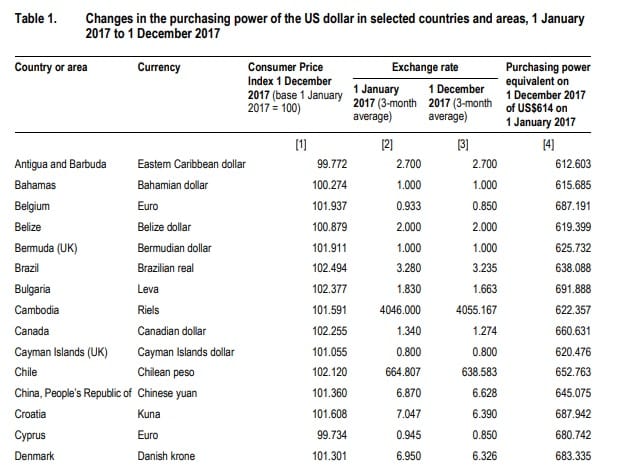
- Consumer Price Index (CPI) – Measures inflation and cost of living
- Exchange Rates – Affects how far a US Dollar goes in each seafarer’s home country
- Purchasing Power – Compares the real value of wages based on a seafarer’s ability to buy goods and services
🌐 Which Countries Influence These Decisions?
The ILO consults two major groups:
- Major Maritime Countries – Those with over 2 million gross tons of shipping.
- Major Supplier Nations – Countries with more than 10,000 seafarers, like:
- Philippines 🇵🇭
- China
- India
- Russia
- Indonesia
These nations contribute data and representation to balance wage standards across global fleets.
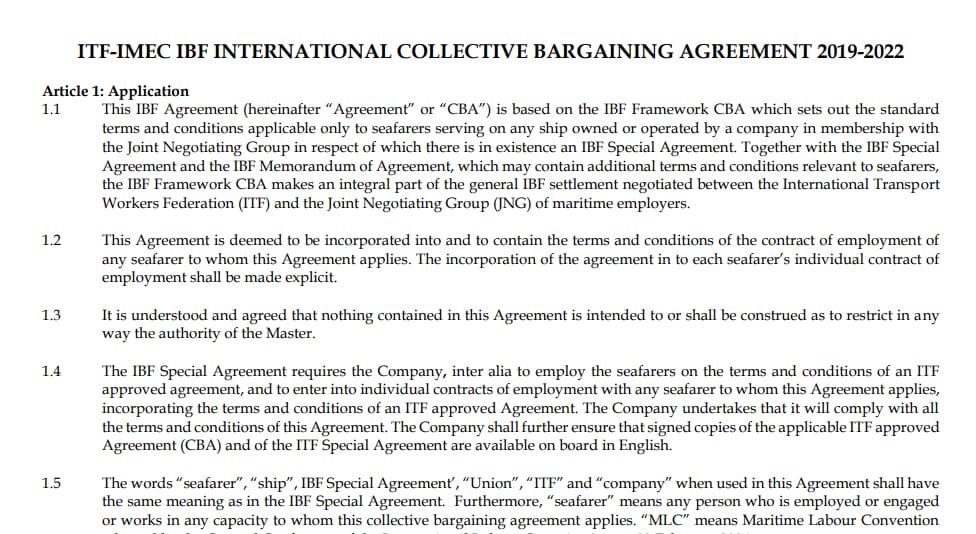
2. 🤝 Collective Bargaining Agreements (CBAs)
While ILO sets minimums, unions and CBAs define actual salaries especially for officers and ratings under unionized companies.
📄 What Is a CBA?
A Collective Bargaining Agreement is a legally binding contract between:
- A shipping company (or employer group)
- A seafarers’ union representing its crew
It outlines conditions such as:
- Basic wages
- Overtime rates
- Rest hours and leave entitlements
- Holiday pay
- Dispute resolution mechanisms
🔧 Sample Seafarers’ Unions with CBAs:
- International Transport Workers’ Federation (ITF)
- Associated Marine Officers and Seamen’s Union of the Philippines (AMOSUP)
- All Japan Seamen’s Union (JSU)
- Norwegian Seafarers’ Union (NSU)
- National Union of Seafarers of India (NUSI)
💡 When you hear “ITF rate” or “AMOSUP rate,” it refers to the minimum wage and working conditions negotiated by these unions under their respective CBAs.
🌎 Why Do Seafarers Earn Different Salaries by Nationality?
It’s a common reality: European or American officers often earn more than Asian or Eastern European crew, even for the same rank.
This is due to:
- Home country wage expectations
- Union strength and coverage
- Flag of the vessel (some flags follow stricter labor rules)
- Company cost-cutting policies
While the difference can feel unfair, the growing push for transparent contracts and CBA enforcement is helping close that gap.
🧭 Final Thoughts: Is Your Salary at Par?
Seafaring is still one of the best-paying careers globally but knowledge is your best tool.
✅ Review your contracts
✅ Know the latest ILO and union wage updates
✅ Compare your offer with industry standards
If your current salary doesn’t reflect your qualifications, vessel type, and duties, it may be time to negotiate better terms or consider new opportunities.
📌 FAQs About Seafarer Salaries
1. Who sets the minimum wage for seafarers?
The ILO’s Joint Maritime Commission, in collaboration with ICS and ITF, updates the global minimum wage for seafarers.
2. What is the ITF rate?
The ITF rate is the minimum salary and work condition standard negotiated by the International Transport Workers’ Federation under CBA agreements.
3. Why do different nationalities earn different wages?
Wages vary due to economic factors, union negotiations, company policies, and flag state laws.
4. Are CBAs mandatory for all ships?
No, but many reputable companies enforce CBAs to meet international labor standards, especially on vessels calling at ITF-inspected ports.
5. Can cadets earn extra money onboard?
Yes. Some ships with open OT systems allow ratings and officers to share extra allowances or treat cadets during shore leave.
📣 Call to Action
Is your salary aligned with the industry standard?
📝 Share this article with your fellow crew.
📊 Check your wage contract vs. CBA and ILO guidelines.
💬 Comment below! Let’s build wage transparency across the fleet!
May the winds be in your favor.


Leave a Reply