

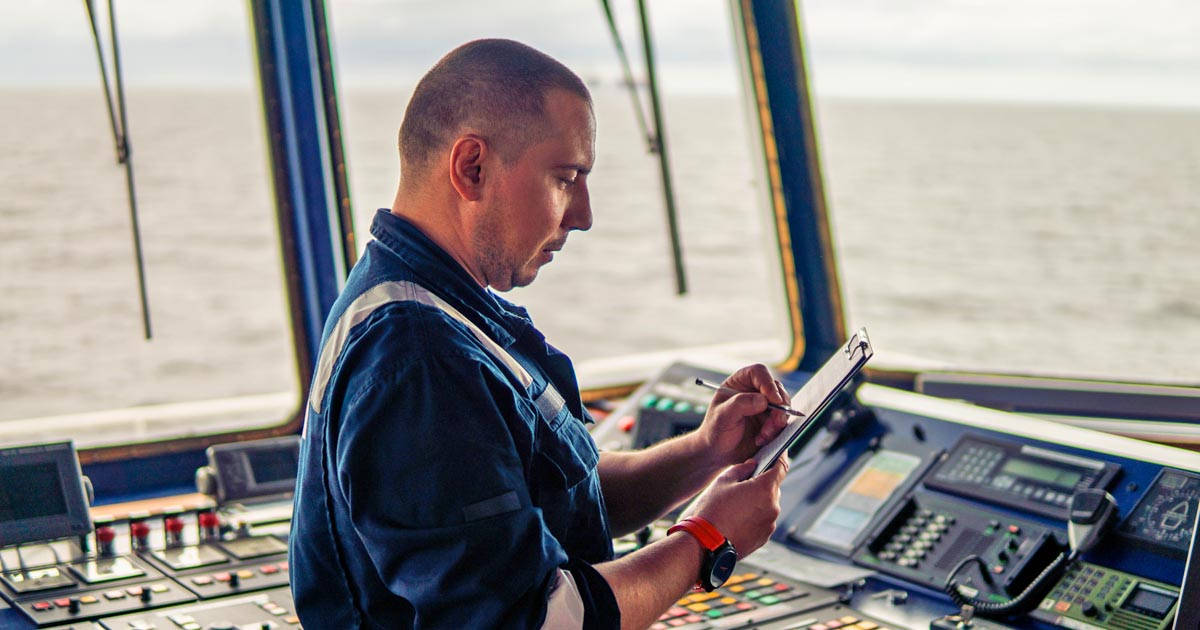
Promotion from Third Mate to Second Mate can be challenging but is equally rewarding.
There may be overlaps in their duties on the bridge, but it can still feel overwhelming knowing that the safety of the ship’s passage is in your hands.
Not only that, but you also need to become more familiar with cargo operations, company manuals, bridge equipment, and your new responsibilities during drills and exercises.
Here’s a short checklist of the things you must know if you want to be promoted from Third Officer to Second Officer.
Navigation, Passage Planning, and Chart Corrections
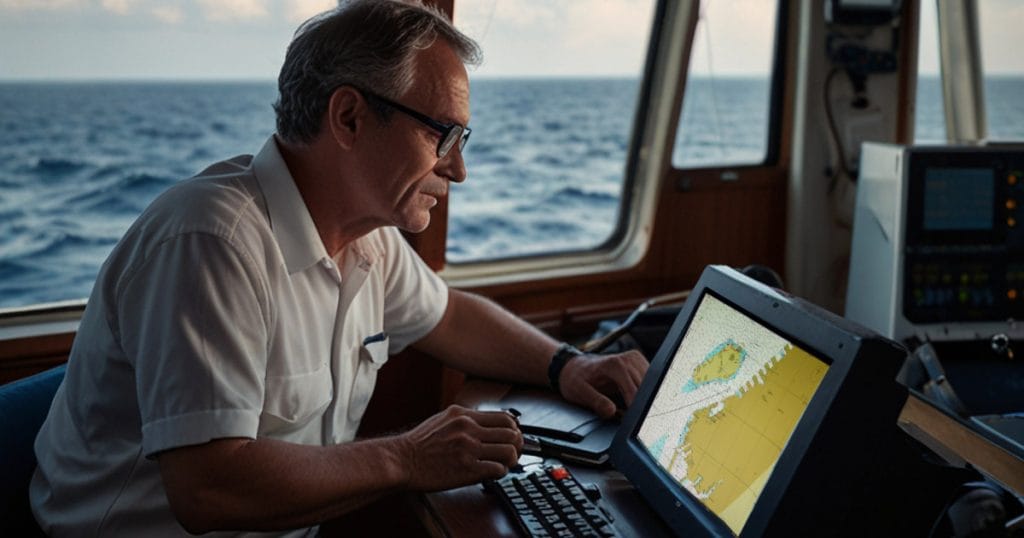
For the most part, you’ll be handling electronic equipment especially on chart works due to the mainstream use of ECDIS.
- Use the Company’s Checklist and follow the Company’s procedures.
- Conduct Passage Planning – Appraisal of the voyage, laying out courses, prediction of tides, UKC calculation, No Go areas, contingency planning, parallel index, ECDIS safety parameters and alarm configuration, clearing bearings, completion of passage plan (relevant records to be checked).
- Understand the requirements and procedures for carrying out Chart/ ECDIS Corrections efficiently.
- Conduct gyro errors and all navigational calculations.
- Understand the requirements and procedures for carrying out corrections to Navigational Publications.
- Understand the procedures for updating ENCs.
- Understand the company policies when sailing in restricted visibility conditions.
- Comply with the requirements of Regulation 19 of Chapter V of SOLAS 1974 as amended.
Heavy Weather
- Perform navigation and ship handling in heavy seas.
- Conduct weather navigation in general to avoid being caught out by bad weather.
- Familiarize and perform navigation on ice.
Familiarization with All On Board Equipment
- Must have appropriate knowledge in addition to receiving necessary familiarization of all equipment used on board.
- Know ECDIS procedures, performance standards, limitations, regulations, and use.
- Understand the operation and tests of Bridge equipment.
- Qualify as GMDSS General Operator.
- Know the basic and advanced ECDIS functions.
- Full understanding of operation, calibration, and maintenance of Gas detection equipment.
- Understand the operation of the fixed gas detection system on the vessel.
- Understand the operational limitations of gas detection equipment.
- Perform calibration procedures for gas detection equipment.
- Know the importance of correct pump operation for gas detection equipment.
- Awareness that fixed gas detection equipment cannot detect certain chemical gases.
- Awareness of limitations of gas detection equipment when used to monitor inert or nitrogen-filled spaces.
Drills and Exercises
- Ensure understanding of responsibilities involved in emergency/ fire and boat drills.
- Attendance during the environmental committee meeting.
- Attendance of safety committee meeting (SCM).
- Familiarize the vessel’s fire detection and alarm systems.
- Understand the importance of annual testing of fire-fighting foam compounds.
- Understand the requirements of maintaining fixed dry powder systems (when fitted).
- Familiarize the fixed fire-fighting systems and their isolation valves.
- Know the records for testing, checking, and maintaining safety equipment on board.
- Understand IMO adopted safety symbols.
- Understand the location of all vents, fire dampers, and fire flaps on board the vessel.
- Locate the international shore connection.
- Know the requirements of routine testing, maintenance, and checks of safety equipment.
- Familiarize the operation of the main and emergency fire pumps.
- Understanding of shipboard emergency procedures.
Shiphandling
- Understand the concept of the ship’s pivot point.
- Know how to use the engines and bow thrusters.
- Understand the effects of wind, current, and tide.
- Perform anchoring safely– removal of lashings, checking power, and walking back anchor.
- Weigh the anchor, understand the procedures, and secure it after use.
Pilotage
- Proper rigging and checking of pilot ladders (communications, safety equipment, personnel).
- Complete the company’s checklists, Pilot Card, and Master/ Pilot Exchange of Information Checklist.
- During pilotage, continuous monitoring of vessel position, VHF radios, and position fixing devices for collision avoidance.
Berthing and Unberthing
- Understand the mooring/unmooring arrangements.
- Perform toolbox meetings.
- Prepare the equipment for mooring operations.
- Proper securing and letting go of tugs.
- Communicate clearly with the bridge.
- Understand Single Point Mooring (SPM) mooring/unmooring operations.
- Understand Conventional Multi-Buoy Moorings (CBM) mooring/unmooring operations.
- Familiarize Ship to Ship (STS) mooring/unmooring operations.
- Understand the vessel emergency towing arrangements.
- Know the correct and safe method of rigging fire wires.
- Know the correct handling of mooring ropes, wires, and associated equipment.
- Understand the operation and testing of mooring winches.
- Know the SWL and marking of mooring bitts, fairleads, rollers, etc.
- Understand the requirements for tendering mooring ropes/wires when moored.
- Be aware of non-slip surfaces and snapback zones at mooring stations.
- Familiarize the safe working practices during mooring/unmooring operations.
Vessel Characteristics
- Understand the basics of the vessel’s maneuvering characteristics.
- Be fully familiar with the ship’s particulars.
- Know the effectiveness of using the rudder, bow thruster, and engines in maneuvering the vessel.
- Know how to perform Man Overboard Maneuvers.
- Deep understanding of Air Draft, Squat, and Under Keel Clearance.
Cargo Handling Operations
- Understand and comply with the requirements of the Tanker Operations Manual (for tankers).
- Understand the operation and requirements of the Inert Gas System.
- Familiarize the operation and requirements of Tank Washing/ Gas Freeing operations.
- Conduct cargo planning (Loading and Discharging) where relevant records are checked.
- Perform cargo calculations.
- Full understanding of Water Ballast Management Plan and record keeping.
- Know the requirements of the Vapour Emission Control System (VECS).
- Adherence to SOPEP, SMPEP, and IOPP.
- Organisation of Officers and Crew for cargo handling operations.
- Understand the requirements for testing, checking, and calibrating cargo handling equipment.
- Understand the limitations of partially loading tanks and the attendant dangers to the ship’s structure.
- Familiarize the contents of ISGOTT.
- Familiarize MSDS sheets for cargoes.
- Understand pressure ratings and testing of cargo pipeline systems.
Flammability Diagram
- Understand the Flammability diagram.
- Know the importance of keeping well below the critical dilution line when introducing air into cargo tanks.
- Know the effects of inert gas on flammability.
- Understand the two main methods of replacing a tank atmosphere.
- Understand the importance of maintaining a positive pressure in cargo tank ullage spaces at all times.
Company ISM System
- Thorough Knowledge of ISM procedures.
- Understand the terms ‘Document of Compliance’ (DOC) and “Safety Management Certificate” (SMC).
- Thorough knowledge of accident, incident, and Near Miss Reporting Procedures.
- Understand objective evidence, observation, non-conformity, and major non-conformity.
- Clear knowledge of the main objectives of the ISM Code.
- Know the authority of the Designated Person Ashore (DPA).
- Understand the Master’s responsibility and authority under the ISM Code.
- Understand the company’s operating systems on the supply of medically fit and correctly certified officers and crew.
- Know how the company ensures new crew are fully familiarized with the vessel and their duties.
- Understand the company’s systems and checklists for the safety of the ship and pollution prevention.
- Understand the company’s procedures for raising non-conformities, reporting incidents, and near misses.
- Know the company’s procedures for dealing with the failure of identified critical equipment.
- Know the company’s procedures for testing and recording of tests of such identified equipment.
- Understand the company’s procedures for internal safety audits, evaluation, and handling of the findings from internal and external audits.
- Has the candidate completed an SSO course? If not, liaison with the Fleet Personnel department is required.

Safety at Work
- Risk Assessment (planning of jobs, execution of work orders, changing conditions).
- Hot Work Procedures (checklist, company approval, safety precautions).
- Procedures for entering enclosed spaces (gas measurement, checklist, BA sets).
- Procedures for working aloft (checklist, height, stages, safety harness, communication).
- Permit system – retaining permits/ procedures.
- Work Planning and toolbox meetings.
- Understand the contents of the Code of Safe Working Practices for Merchant Seamen.
- Know the storage location of hazardous materials on board.
- Has the candidate completed a Safety Officer Course? If not, to be completed as soon as possible.
- Has the candidate completed a Medical Officer course? If not, then liaison with the Fleet Personnel Department is required.
- Awareness of Medical Officer duties.
- Awareness of Safety Officer duties.
Is This Too Much?
In hindsight, this could be overwhelming! But that’s just on paper.
If you are practicing your Third Officer role diligently by heart, you may already be familiar with 90% of the things mentioned here.
That said, I wish you good luck on your promotion from Third Officer to Second Officer.
May the winds be in your favor.
Leave a Reply