


An aneroid barometer is a precision instrument used to measure atmospheric pressure– the weight of the air above us.
Onboard ships, it plays a vital role in weather forecasting and route planning.
Unlike mercury barometers, the aneroid type contains no liquid, making it more suitable for marine environments.
It provides real-time readings of barometric pressure in units such as hPa (hectopascals) or inHg (inches of mercury), helping officers detect approaching storms or fair weather conditions. ⚠️🌤️
🔑 Key Concept: Atmospheric pressure helps us understand and anticipate changes in the weather, especially crucial for safe navigation at sea.
📜 Origin of the Aneroid Barometer
Before scientists understood atmospheric pressure, it was widely believed that air had no weight.
This changed in the 17th century with a breakthrough experiment.
🧪 Torricelli’s Experiment
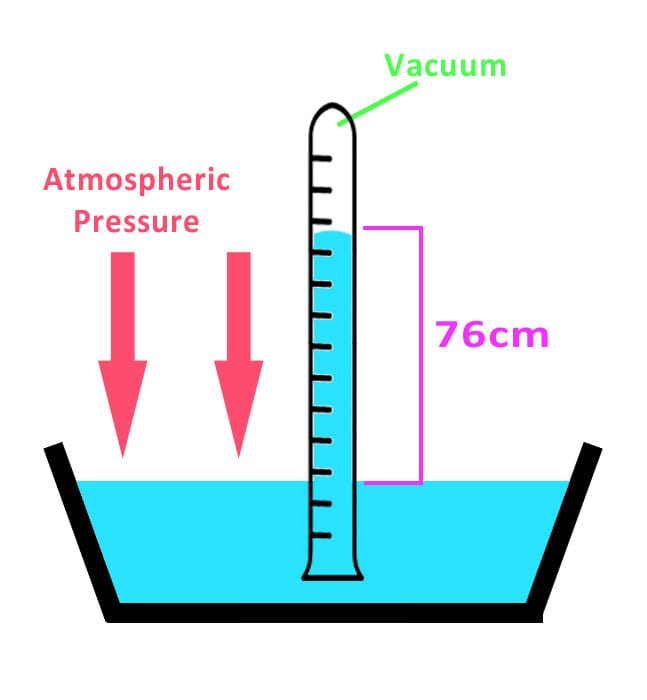
In Italy, Evangelista Torricelli created the first liquid barometer using a glass tube filled with mercury.
He noticed that atmospheric pressure could support only a certain column height of liquid.
His findings proved that air has weight and exerts pressure on everything around us.
This idea was confirmed by Blaise Pascal, who observed that pressure readings decrease with altitude.
This laid the foundation for the development of both mercurial and eventually aneroid barometers.

🚢 Why Ships Use Aneroid Barometers
While mercurial barometers were once the standard, they’re now almost entirely replaced by aneroid barometers on ships.
Here’s why:
| 📉 Mercury Barometers | ✅ Aneroid Barometers |
|---|---|
| Fragile glass tubes | Durable metal casing |
| Bulky and toxic | Portable and chemical-free |
| Hard to read on rolling ships | Easy to read under all conditions |
| Banned by the EU for toxicity | Fully compliant and safe |
⚠️ Mercury is a hazardous substance. Its use has been banned in the EU, making aneroid barometers the safer and more practical option at sea.
⚙️ Main Parts of an Aneroid Barometer
An aneroid barometer has no liquid– the term “aneroid” literally means “without liquid.”
Instead, it uses mechanical parts to detect pressure changes.
🔧 The 5 Main Components:
- Aneroid Chamber – A sealed, partially vacuumed metallic capsule that expands or contracts with pressure changes.
- Support Spring – Prevents the chamber from collapsing under high pressure.
- System of Levers – Transfers motion from the chamber to the pointer.
- Pointer (Needle) – Moves to indicate the current atmospheric pressure.
- Dial (Scale) – Displays pressure readings in hPa or inHg.
These parts work together to translate atmospheric pressure into a visual reading, which officers can then monitor and log.
🛠️ In some modern designs, the aneroid chamber may be filled with gas to compensate for temperature changes, improving accuracy.

🔄 How Aneroid Barometers Work
An aneroid barometer functions by detecting changes in atmospheric pressure using mechanical movement- not liquid.
Here’s how it works:
- The aneroid chamber inside is a sealed, flexible capsule.
- When air pressure increases, the chamber contracts; when pressure drops, it expands.
- These movements are transferred through a system of levers.
- The levers move the pointer across the dial, showing the current pressure.
⚙️ This design makes aneroid barometers more resilient and responsive, especially in the dynamic environment of a ship at sea.

📏 Barometric Pressure at Sea
Understanding pressure readings is crucial for marine weather forecasting.
🌐 Normal Sea-Level Pressure
At sea level, standard atmospheric pressure is:
- 1013.25 hPa (hectopascals)
- 29.921 inHg (inches of Mercury)
- 760 mmHg (millimeters of Mercury)
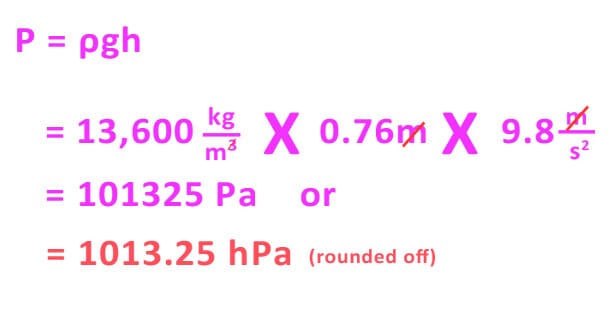
This value was derived from Torricelli’s experiment using mercury:
Formula:
P = ρgh
Where:
- ρ = density of mercury (13,600 kg/m³)
- g = gravity (9.8 m/s²)
- h = height (0.76 m)
Example Calculation:P = 13,600 × 9.8 × 0.76 ≈ 101,325 Pa = 1013.25 hPa
📉 Pressure Ranges
| Pressure Reading | Interpretation |
|---|---|
| < 1000 hPa | Low pressure (Possible bad weather) |
| 1013.25 hPa | Normal sea-level pressure |
| > 1022 hPa | High pressure (Stable/fair weather) |
⛅ Tip: A sudden drop in pressure may signal a developing storm system.
🛳️ How to Use an Aneroid Barometer on Ships
Using an aneroid barometer onboard is simple but must be done properly for accuracy.
📌 Step-by-Step Use
- Reference Calibration
- Compare readings with a nearby meteorological station or use a trusted weather app.
- Most ship barometers are calibrated at sea level.
- Adjust if Needed
- Use the adjustment screw at the back to calibrate.
- Install Securely
- Mount it vertically, away from direct heat or vibration.
- Tap the Glass Gently
- Light tapping dislodges stuck levers or needle (common onboard).
- Set the Manual Hand
- After taking a reading, align the manual hand to current pressure.
- This helps you track pressure trends (rising or falling) at a glance.
✅ Officer Tips at Sea
- Log barometer readings every watch, especially during weather changes.
- Correlate pressure changes with cloud formations and wind shifts.
- Use the barometer with other tools like weather fax, satellite reports, or anemometers for better forecasting.
📖 Cadet Tip: Regular use of a barometer helps sharpen your weather-reading instincts- critical for voyage planning and safety.
❓ Frequently Asked Questions (FAQ)
📌 What is the normal atmospheric pressure at sea level?
The standard sea-level pressure is 1013.25 hPa or 29.921 inHg.
📌 Why are aneroid barometers used on ships instead of mercury barometers?
Aneroid barometers are non-toxic, portable, and durable, while mercury types are fragile and hazardous, especially in rough seas.
📌 How often should I check the barometer onboard?
Ideally, check it every watch (every 4 hours), especially before and during weather disturbances.
📌 What does a sudden drop in pressure mean?
A rapid pressure drop usually signals an approaching low-pressure system or storm.
📌 Do I need to calibrate the barometer at sea?
Yes- especially if it’s giving inaccurate readings compared to local forecasts. Use the adjustment screw on the back.
📣 Conclusion: Master the Barometer, Master the Weather 🌊
Aneroid barometers are simple yet powerful tools for marine weather monitoring.
They give real-time insights into atmospheric conditions- essential for safe navigation.
Whether you’re a cadet learning ship instruments or an officer planning routes, knowing how to read and interpret pressure changes can make all the difference at sea. 🌦️⚓
🧭 Keep your barometer accurate and log your readings to see the barometric trend and forecast the weather.
May the winds be in your favor.
Leave a Reply